ESC

What are you looking for?

ESC

What are you looking for?

Shopping cart

Your favorites

You have not yet added any recipe to your favorites list.

Browse recipes

Schedule your 15-minute demo now

We’ll tailor your demo to your immediate needs and answer all your questions. Get ready to see how it works!

0
0
×

School E-Shop

Identifying Common Playground Hazards

Playgrounds are where children build confidence, friendships, and physical skills—but they can also become unsafe if hazards go unnoticed. Most Playground injuries are preventable when schools and child care centers know what to look for and act early.

Common Playground Hazards

  1. Faulty Equipment
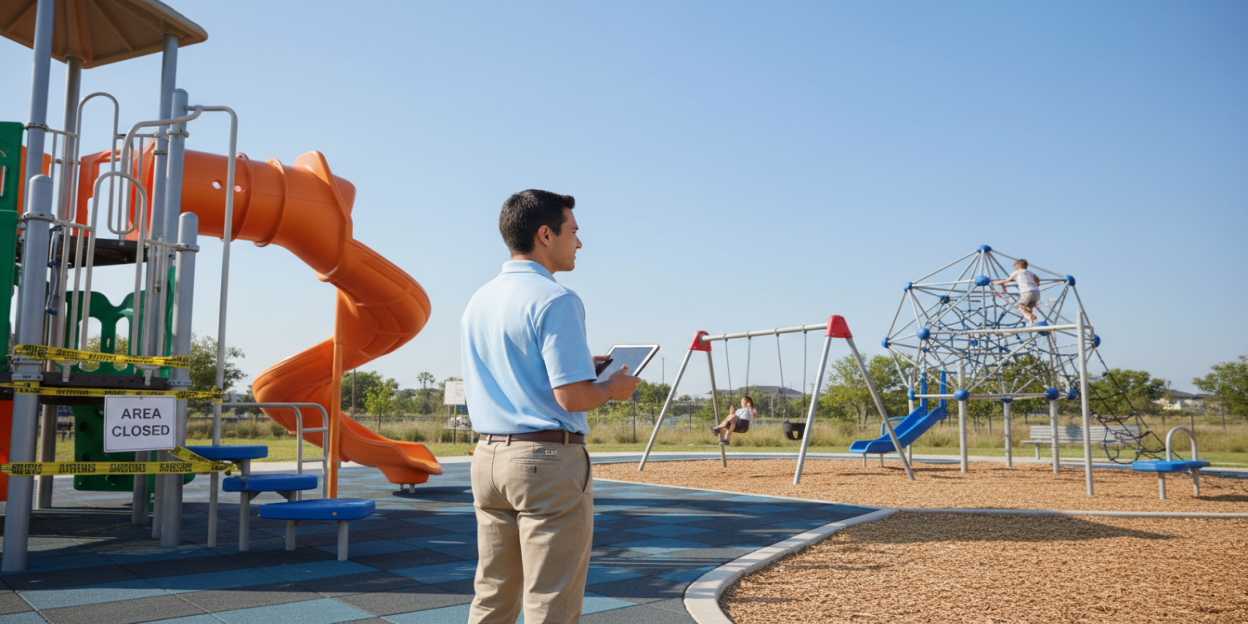
    Playground structures face heavy daily use. Over time, rust, loose screws, sharp edges, and cracked plastic or wooden surfaces can develop. These issues may seem minor but can quickly turn into cut, fall, or entrapment risks. Any wobbling, broken, or unstable equipment is a clear warning sign that immediate attention is needed.
  2. Hard or Inadequate Surfacing
    Falls are the leading cause of Playground injuries. When children fall onto concrete, asphalt, compacted soil, or thin grass, the force of impact is much higher. Safety‑approved surfacing—like rubber tiles, poured‑in‑place rubber, or deep, loose‑fill mulch—helps absorb impact and reduce the severity of injuries.
  3. Improper Use of Equipment
    Children are naturally curious and creative. They may stand on swings, climb outside of guardrails, or slide head‑first. While play should be fun and flexible, misuse such as “riding” on top of monkey bars or pushing swings too high can result in serious falls or collisions.
  4. Environmental Hazards
    Not all risks come from the equipment itself. Wet or mossy surfaces, puddles, loose rocks, exposed roots, sticks, broken glass, or low‑hanging branches can create slip, trip, and impact hazards. Extreme heat on metal or plastic surfaces can also cause burns.

Steps to Mitigate Risks

  • Daily Inspections
    • Conduct a quick visual walk‑through before children go out to play.
    • Look for broken parts, loose bolts, sharp edges, unstable structures, puddles, or debris.
    • Have a simple checklist and a clear process for reporting and tagging unsafe equipment.
  • Regular Maintenance
    • Schedule routine, documented inspections by trained staff or qualified professionals.
    • Repair or replace rusted, cracked, or outdated equipment promptly.
    • Keep surfacing at the recommended depth and condition for effective impact absorption.
  • Improved Drainage and Ground Conditions
    • Ensure proper drainage to prevent waterlogging and slippery areas.
    • Level uneven ground where children run and queue for equipment.
  • Clear Guidelines and Supervision
    • Post simple, visible rules such as “Feet first on slides,” “No climbing outside rails,” and “One at a time on ladders.”
    • Train staff to model and reinforce safe play while still encouraging fun.

By consistently identifying and addressing these common hazards, schools and child care centers can significantly reduce Playground injuries and create a safer space where children can explore, learn, and play with confidence.

Prev Article
How Strong HVAC Policies Create Safer, Healthier Schools
Next Article
Designing Age-Appropriate Play Areas for Safer School Playgrounds

Related to this topic:

rocket-icon rocket-icon rocket-icon

Learn What Makes Schools Truly Safe

Receive safety guides, policy updates, and best practices from global experts.

We care about your Personnel Data. Please check Privacy Policy