ESC

What are you looking for?

ESC

What are you looking for?

Shopping cart

Your favorites

You have not yet added any recipe to your favorites list.

Browse recipes

Schedule your 15-minute demo now

We’ll tailor your demo to your immediate needs and answer all your questions. Get ready to see how it works!

0
0
×

School E-Shop

Low-Cost Water Conservation for Schools

Water conservation in schools doesn’t have to depend on expensive technology or major infrastructure upgrades. With thoughtful planning and consistent habits, schools can significantly reduce water wastage, cut utility bills, and model environmental responsibility for students.

1. Fixing Leaks: The First and Easiest Win
A single dripping tap or leaking flush can waste hundreds of liters of water each year. For budget-conscious schools, this is the lowest-cost, highest-impact starting point.

  • Schedule simple monthly inspections of taps, flush tanks, overhead tanks, and pipelines.
  • Create an easy reporting system so teachers, students, and staff can quickly flag leaks.
  • Equip maintenance staff with basic tools and train them to handle minor plumbing issues immediately.

Addressing leaks promptly prevents slow, invisible losses that quietly drain both water and money.

2. Simple Rainwater Harvesting for Non-Potable Use
Rainwater harvesting doesn’t always require a complex system. Even basic setups can make a difference.

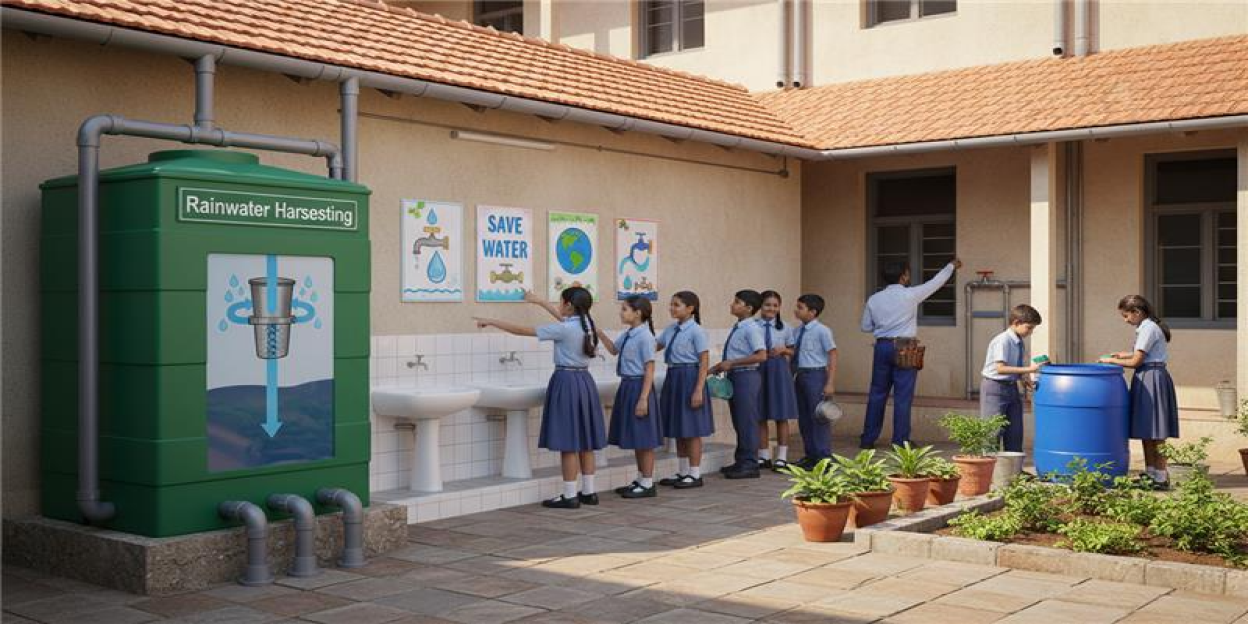
  • Install gutters and direct roof runoff into drums or storage tanks.
  • Use collected rainwater for gardening, cleaning outdoor areas, or flushing toilets where feasible.
  • Involve students in setting up and maintaining the system as part of science or environmental projects.

This turns the school campus into a live learning lab for sustainability.

3. Promoting Everyday Behavioral Changes
Technology alone cannot save water—people do. Small habits practiced by many can create big impact.

  • Teach students to turn off taps while soaping hands or brushing teeth.
  • Encourage using buckets and mugs instead of running hoses for cleaning.
  • Place clear, child-friendly posters near wash basins and toilets as reminders.
  • Run student-led campaigns, such as “Water Warriors” teams, to keep peers accountable.

When children learn these habits early, they carry them home and into adulthood.

4. Using Water-Efficient Fixtures Wisely
Some low-cost upgrades deliver long-term savings.

  • Install tap aerators, low-flow taps, and dual-flush toilets in phases, starting with high-use areas.
  • Choose durable, easy-to-maintain products to avoid frequent replacements.
  • Track water bills before and after installation to show leadership the cost-benefit.

This helps school management see these as investments, not expenses.

5. Measuring and Celebrating Progress
What gets measured gets improved.

  • Record monthly water meter readings or keep simple manual logs.
  • Compare usage across months and seasons to spot trends.
  • Share improvements in assemblies, noticeboards, and parent meetings.

Celebrating progress builds a culture where everyone feels responsible for saving water.

Water conservation is not just an environmental issue—it’s a core part of safe, sustainable school management. Start with one or two low-cost strategies this month, involve your students and staff, and build from there. Small, consistent actions today can secure water for your school community tomorrow.

Prev Article
Water Conservation Education: Instilling Habits for a Sustainable Future
Next Article
The Foundation of Fire Safety in Schools Prevention and Preparedness

Related to this topic:

rocket-icon rocket-icon rocket-icon

Learn What Makes Schools Truly Safe

Receive safety guides, policy updates, and best practices from global experts.

We care about your Personnel Data. Please check Privacy Policy