ESC

What are you looking for?

ESC

What are you looking for?

Shopping cart

Your favorites

You have not yet added any recipe to your favorites list.

Browse recipes

Schedule your 15-minute demo now

We’ll tailor your demo to your immediate needs and answer all your questions. Get ready to see how it works!

0
0
×

School E-Shop

Stronger Training, Safer School Pools

A safe school pool doesn’t start with deep ends, lane ropes, or shiny tiles—it starts with people. Well-trained lifeguards and supervisors are the backbone of any effective pool safety program. When their skills are strong and regularly updated, swimming becomes a powerful, low-risk learning experience instead of a hidden hazard.

1. Certifications: The Non‑Negotiable Foundation
Every lifeguard and pool supervisor should hold current certifications in CPR, First Aid, and lifeguard-specific skills. These credentials ensure staff can respond to breathing difficulties, cardiac arrest, injuries, and near‑drowning without hesitation. Schools should partner only with recognized training organizations to certify and recertify pool staff, keeping records updated and easily accessible.

2. Emergency Response Training: Beyond the Certificate
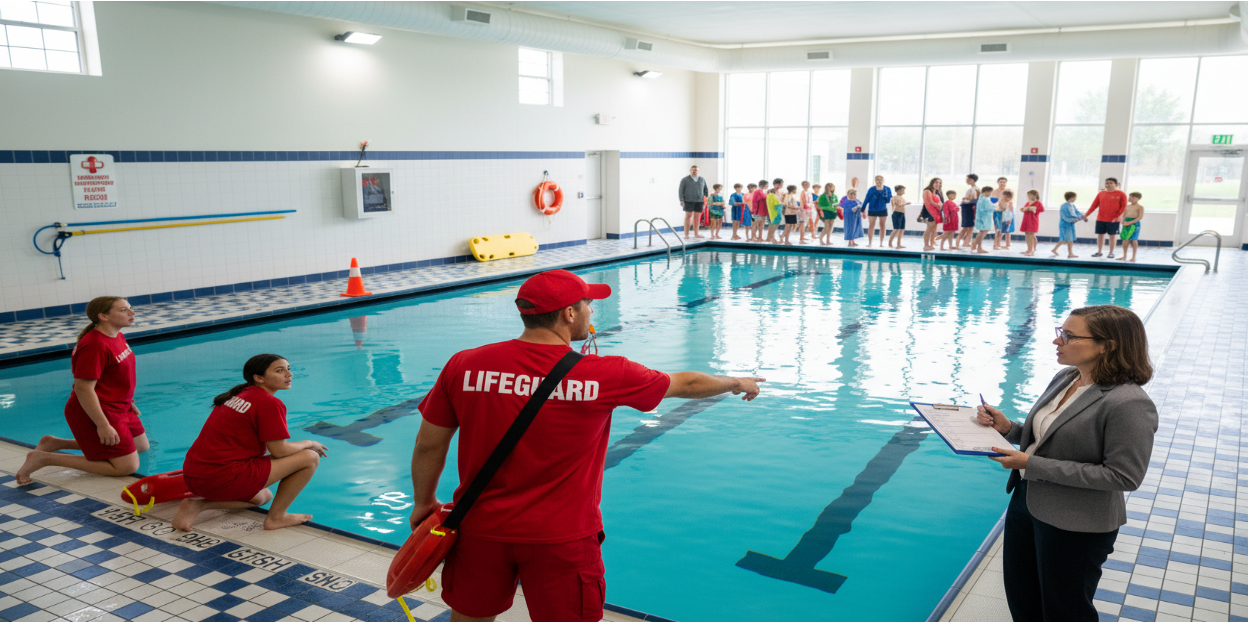
A card in the wallet is not enough. Lifeguards and supervisors need hands‑on practice with real-world scenarios: silent drowning, spinal injuries, slips and falls, and cardiac emergencies. Simulated rescue drills help staff build three critical abilities: scanning effectively, making quick decisions, and coordinating as a team. Practicing under time pressure reduces hesitation during real incidents.

3. Ongoing Training: Safety Is a Continuous Process
Skills fade if they’re not used. Refresher courses at least once or twice a year keep life-saving techniques sharp and ensure compliance with evolving guidelines and local regulations. Short, focused in‑service sessions—on topics like safe entry/exit, use of AEDs, or managing crowded pool sessions—build confidence and consistency.

4. Teachers and Volunteers: Safety Support Team
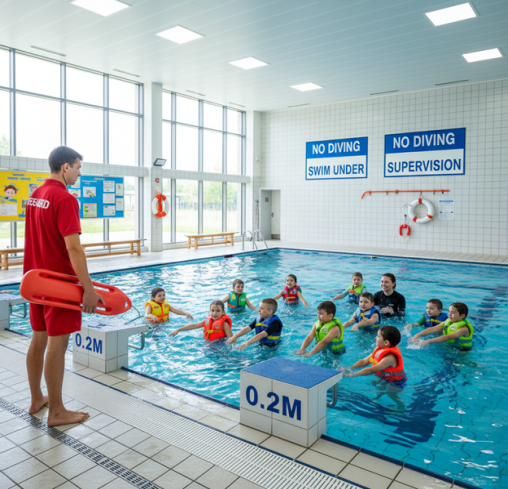
While lifeguards lead safety, they should not work alone. Teachers and trained volunteers can support by:

  • Supervising behavior in changing areas and on the deck
  • Reinforcing pool rules with students
  • Assisting with roll calls and group organization
  • Alerting lifeguards quickly when they notice risks

Basic water safety training for this group helps them recognize early warning signs and avoid unsafe practices, such as overcrowding one area or allowing running on wet surfaces.

5. Simulated Drills: Preparing Everyone, Not Just Staff
Regular emergency drills involving staff and, where appropriate, students are essential. Drills should cover:

  • Whistle or alert signals and what they mean
  • Clear roles for lifeguards, supervisors, and teachers
  • Evacuation routes and assembly points
  • How to keep bystanders calm and out of the way

When everyone knows their role, panic decreases and response times improve dramatically.

If your school has a pool, treat training as your first safety investment—not an optional extra. Review certifications, schedule refresher sessions, and plan your next full emergency drill. A few hours of preparation today can prevent a tragedy tomorrow and create a pool environment where students can learn, swim, and thrive safely.

Prev Article
Essential Swimming Pool Safety Equipment Every School Must Have
Next Article
Designing Safe and Child-Friendly Swimming Pool Areas in Schools

Related to this topic:

rocket-icon rocket-icon rocket-icon

Learn What Makes Schools Truly Safe

Receive safety guides, policy updates, and best practices from global experts.

We care about your Personnel Data. Please check Privacy Policy