ESC

What are you looking for?

ESC

What are you looking for?

Shopping cart

Your favorites

You have not yet added any recipe to your favorites list.

Browse recipes

Schedule your 15-minute demo now

We’ll tailor your demo to your immediate needs and answer all your questions. Get ready to see how it works!

0
0
×

School E-Shop

Making Schools Earthquake-Resilient

When an earthquake strikes, school buildings must act as shields, not hazards. In many regions, however, older school structures were built before modern seismic standards. Retrofitting these buildings is one of the most effective ways to protect students, teachers, and staff from earthquake-related injuries and structural failures.

Why Seismic Assessments Come First
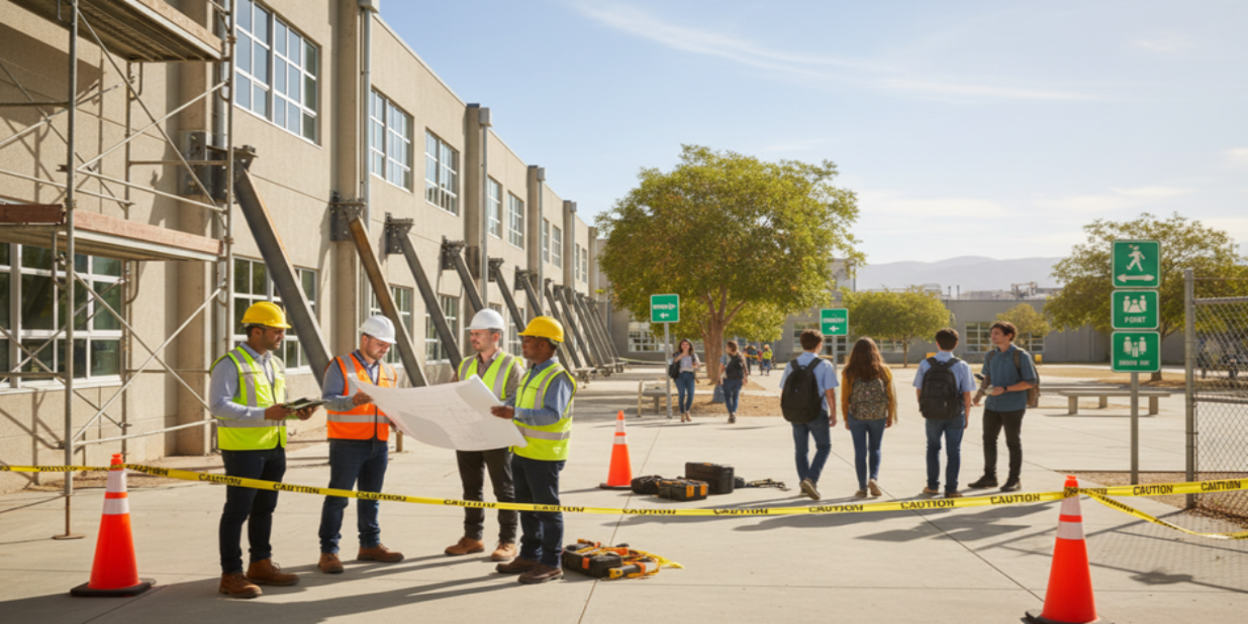
Before any upgrade begins, schools should undergo a detailed seismic assessment. Qualified structural or seismic engineers inspect:

  • Building age and design – Was it built to any seismic code?
  • Construction materials – Unreinforced masonry, outdated concrete, or poor connections.
  • Existing safety features – Expansion joints, bracing, and load paths.

This assessment identifies where the building is most vulnerable—such as weak columns, heavy roofs, or poorly connected walls—so that retrofitting can be targeted and cost-effective.

Key Retrofitting Techniques for Schools

  1. Structural Reinforcements
    Strengthening the building’s “skeleton” improves its ability to remain stable during shaking. This can include:
    • Adding steel braces, shear walls, or jacketing to columns
    • Strengthening foundations and connections between foundations and walls
    • Upgrading roofs so they are securely anchored to the supporting walls
  2. Seismic Dampers
    Seismic dampers act like shock absorbers for buildings. They help absorb and dissipate the energy generated by an earthquake, reducing how much the building sways and limiting damage to both structure and interiors.
  3. Flexible Connections
    Rigid connections can crack under intense movement. By introducing flexible connections between structural elements (such as beams and columns, or between building wings), the building can move in a controlled way without transferring excessive stress to any single component.

Financial Considerations: Cost vs. Risk
Retrofitting is a significant investment—but the cost of inaction can be far greater. School systems and child care organizations can:

  • Prioritize high-risk buildings based on seismic assessments
  • Apply for government grants, NGO support, or corporate CSR funding
  • Plan phased retrofitting, tackling the most critical vulnerabilities first

Positioning retrofitting as part of long-term capital planning makes it more manageable and sustainable.

Beyond Compliance: A Commitment to Safety
Retrofitting is not just about meeting building codes or passing inspections. It reflects a school’s commitment to life safety, continuity of learning, and community trust. By assessing vulnerabilities, applying appropriate retrofitting techniques, and seeking financial support where needed, school leaders can significantly reduce earthquake risks.

School Leaders and Administrators

  • Schedule a professional seismic assessment for older buildings.
  • Create a retrofit priority list based on risk.
  • Communicate plans and progress transparently with parents, staff, and the community.

Earthquakes cannot be prevented—but their impact on schools can be. Retrofitting today means safer classrooms, calmer parents, and resilient communities tomorrow.

Prev Article
Preparing Schools for Earthquakes: A Practical Readiness Guide
Next Article
Conducting Earthquake Drills in Schools: Best Practices for Real Preparedness

Related to this topic:

rocket-icon rocket-icon rocket-icon

Learn What Makes Schools Truly Safe

Receive safety guides, policy updates, and best practices from global experts.

We care about your Personnel Data. Please check Privacy Policy