School exhibitions
are a highlight of the academic year—students proudly present projects, parents
engage with learning, and schools showcase their best work. But with increased
footfall, unfamiliar visitors, and temporary setups, these events also bring
added safety risks. A little planning can ensure exhibitions remain inspiring,
organized, and safe for everyone.
1. Start with a Clear Security Plan
Every safe
exhibition begins with a written, well-communicated security plan. At a
minimum, schools should:
- Map and clearly mark evacuation
routes and emergency exits. Ensure pathways are never blocked by stalls,
chairs, or crowds.
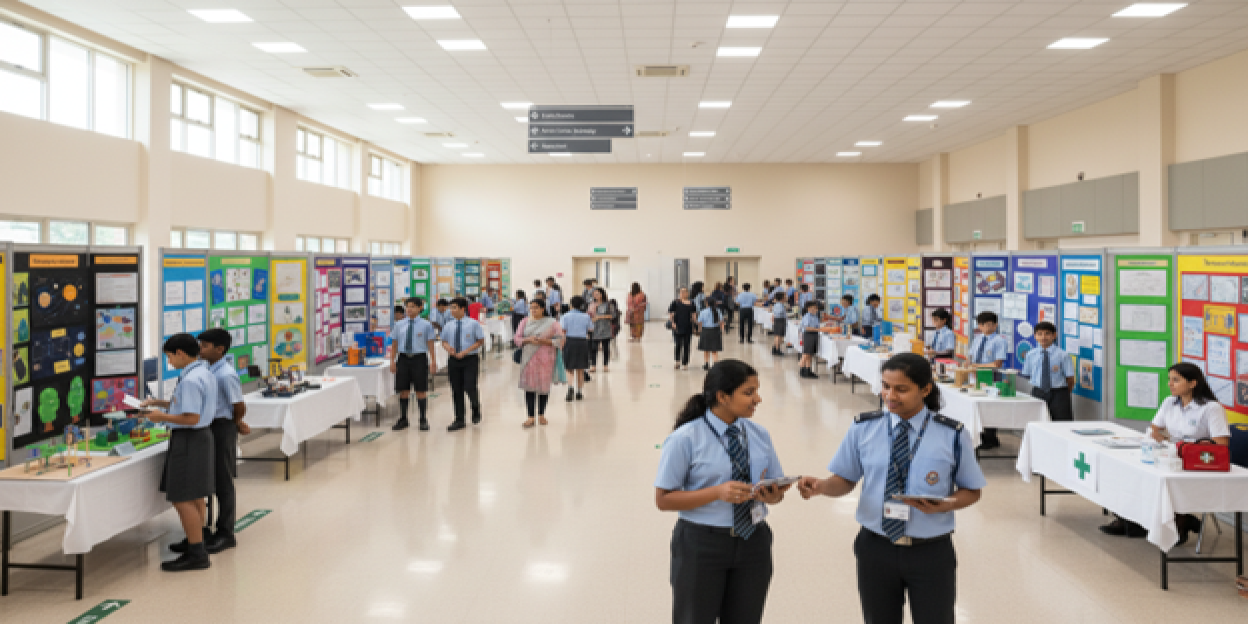
- Designate a visible first-aid
area staffed by trained personnel or a nurse, equipped with basic medical
supplies.
- Establish communication
protocols: who calls emergency services, who coordinates with local law
enforcement, and how information is relayed to staff and parents.
- Set up security checkpoints at
all main entry and exit points to control and monitor visitor flow.
Sharing this plan
with staff, volunteers, and student leaders before the event is critical.
2. Strengthen Supervision and Access Control
Unrestricted
movement and unsupervised areas increase risk. To maintain a safe environment:
- Issue visitor badges or stickers
at entry to identify all non-staff adults on campus.
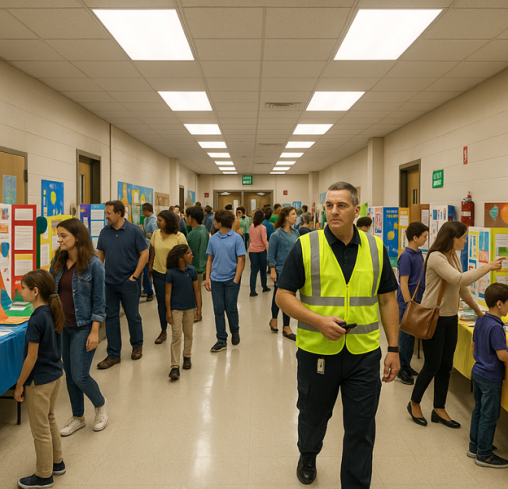
- Position staff or security
personnel at key junctions—entrances, exits, staircases, and high-traffic
corridors.
- Assign adult chaperones to
student groups or zones to ensure children are never left unattended at
stalls or in side rooms.
- Clearly define “staff-only” and
“students-only” areas and ensure they are not accessible to the public.
This not only
improves safety but also provides reassurance to parents.
3. Identify and Prevent Physical Hazards
Exhibition setups
often involve temporary wiring, displays, and equipment. Before opening doors:
- Inspect all electrical
connections: secure loose wires, avoid overloading sockets, and keep
cables taped down or covered to prevent tripping.
- Check tables, models, and display
stands to ensure they are stable and cannot easily topple if leaned on or
bumped.
- Ensure fire extinguishers are
available, accessible, and visible, especially near electrical-heavy zones
or high-risk setups.
- Maintain well-lit spaces,
particularly near entrances, staircases, and exit routes, to reduce
accidents and improve visibility during any emergency.
A pre-event safety
walkthrough with a checklist can catch most of these issues early.
4. Communicate Safety to Everyone
Safety works best
when everyone understands their role:
- Brief students on basic safety
rules: staying in assigned areas, not running, and informing an adult if
they notice anything unsafe.
- Inform parents and visitors about
entry procedures, exit routes, and key safety instructions through
signage, announcements, or handouts.
- Encourage staff to report hazards
immediately and empower them to pause an activity if they feel it’s
unsafe.
School exhibitions
should be memorable for creativity—not for safety incidents. Review your
current exhibition practices, create or update a safety plan, and involve your
staff and students in making every event secure, well-supervised, and
hazard-free. Now is the best time to turn your next school exhibition into a
model of safety and excellence.
Prev Article
Overcoming Challenges in Implementing Peer Medication Policies in Schools
Next Article
Emergency Preparedness for School Exhibitions: A Practical Guide