ESC

What are you looking for?

ESC

What are you looking for?

Shopping cart

Your favorites

You have not yet added any recipe to your favorites list.

Browse recipes

Schedule your 15-minute demo now

We’ll tailor your demo to your immediate needs and answer all your questions. Get ready to see how it works!

0
0
×

School E-Shop

Safety Planning for School Exhibitions

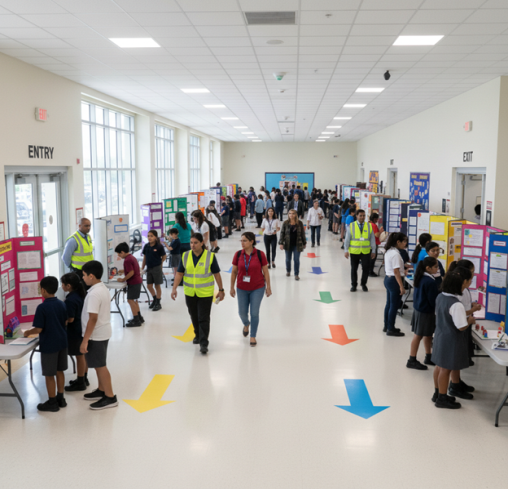
A school exhibition is an exciting event—students showcase their work, parents visit, and the campus feels alive. But with large crowds and busy movement, schools must be prepared for emergencies. A clear, well-planned emergency preparedness strategy ensures that learning and celebration happen safely.

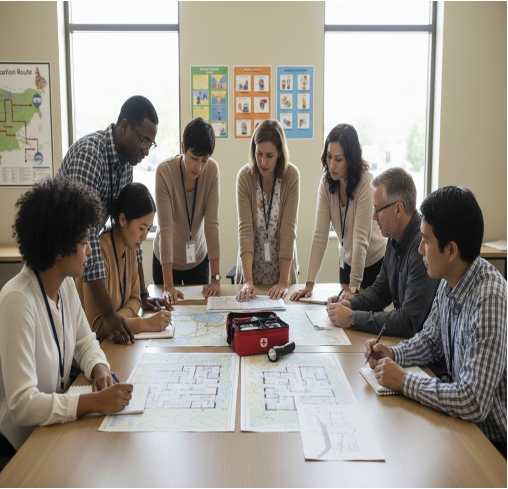
A strong plan starts with risk assessment. Before the exhibition, school leaders and safety teams should walk through the venue and identify potential risks. These may include overcrowded corridors, blocked exits, temporary electrical connections, fire hazards at stalls, or unauthorized individuals entering the premises. Based on this assessment, schools should mark and communicate designated emergency assembly points where students, staff, and visitors can gather safely if an evacuation is needed. Pre-event safety inspections of exits, fire extinguishers, lighting, and pathways help confirm that the environment is ready for visitors.

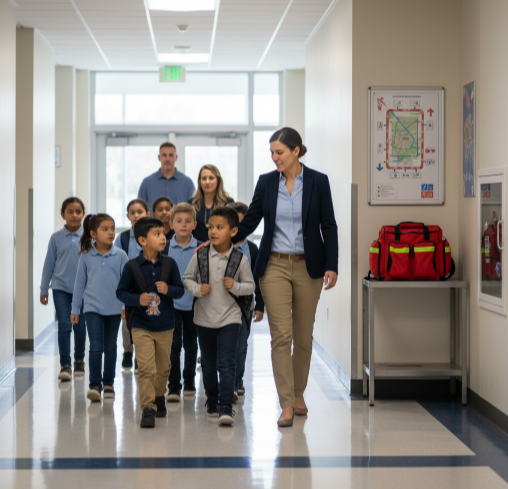
Next, every exhibition should have first-aid and medical support readily available. At minimum, a basic first-aid team should be on standby, with staff trained in CPR and first aid. A clearly marked medical response station should be set up in an easily accessible area, with essential supplies such as bandages, ice packs, gloves, and an updated emergency contact list. For larger events, schools should coordinate with local medical services or ensure that an emergency response vehicle can reach the campus quickly if required.

Communication strategies are critical during any emergency. Schools should assign specific staff members or security personnel to handle communication. Walkie-talkies help security teams and event coordinators stay connected across the campus. A functioning public address (PA) or loudspeaker system should be tested in advance so that clear, calm announcements can be made to guide the crowd if needed. Displaying important emergency numbers and helplines throughout the venue—near entrances, stages, and main corridors—ensures that help can be reached quickly.

Finally, staff and volunteers should be briefed on the emergency plan before the event. Everyone should know who is in charge, where exits and assembly points are, and how to guide students and visitors in case of a crisis.

By investing time in risk assessment, first-aid readiness, and strong communication systems, schools can significantly reduce the impact of unexpected incidents. Emergency preparedness is not about creating fear—it is about creating confidence that the school is ready to protect every child, educator, and visitor during its exhibitions.

School leaders should integrate emergency planning into every major event. Review your current exhibition plans, update safety protocols, and train your team—because a safe event is a successful event.

Prev Article
Ensuring School Safety During Exhibitions: A Practical Guide for Schools
Next Article
Smart Crowd Control for Safe School Exhibitions

Related to this topic:

rocket-icon rocket-icon rocket-icon

Learn What Makes Schools Truly Safe

Receive safety guides, policy updates, and best practices from global experts.

We care about your Personnel Data. Please check Privacy Policy