ESC

What are you looking for?

ESC

What are you looking for?

Shopping cart

Your favorites

You have not yet added any recipe to your favorites list.

Browse recipes

Schedule your 15-minute demo now

We’ll tailor your demo to your immediate needs and answer all your questions. Get ready to see how it works!

0
0
×

School E-Shop

Responding to Illness and Injury

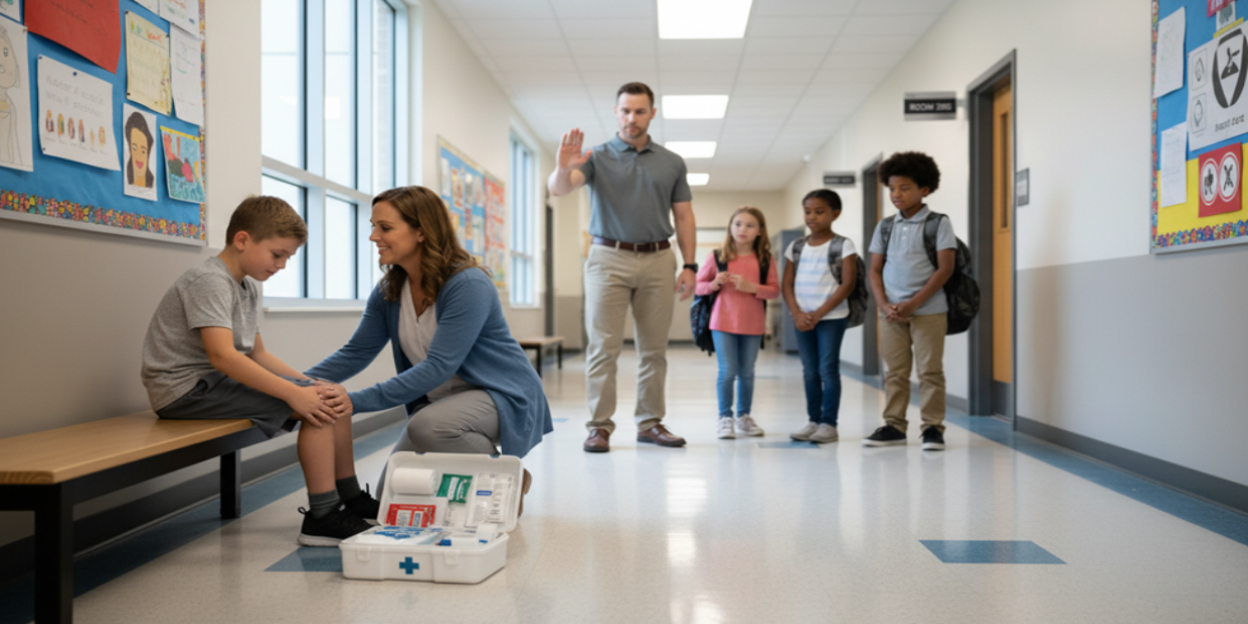
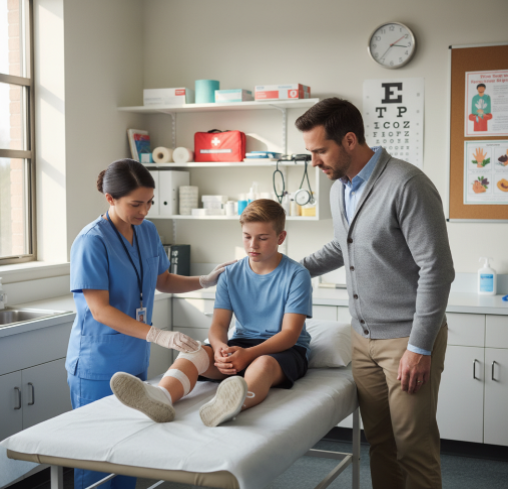
When a child falls ill or gets hurt at school, educators are often the first adults on the scene. How staff respond in those first few minutes can make a critical difference—both medically and emotionally. Having clear steps and a calm, consistent approach helps protect students, reassures families, and strengthens the school’s overall safety culture.

1. Assessing the Situation

The first step is to quickly assess what is happening.

  • Evaluate severity:
    • Is the student breathing normally?
    • Are they conscious and responsive?
    • Is there heavy bleeding, severe pain, difficulty breathing, or signs of an allergic reaction?
      Life-threatening or serious signs mean you should immediately follow your school’s emergency protocol and prepare to call emergency services.
  • Stay calm and in control:
    Students will mirror adult behavior. Use a steady voice, give simple instructions (“Everyone, please step back and give us space”), and avoid showing panic. This helps keep the injured or ill student from becoming more distressed.

2. Administering First Aid

Every educator does not need to be a medical expert, but basic first aid and CPR training are essential.

  • Encourage staff certification:
    Schools should ensure that key staff are trained in CPR, AED use, and first aid, and that this training is refreshed regularly.
  • Follow step-by-step protocols:
    Use your school’s approved first-aid guidelines for common situations, such as:
    • Nosebleeds: Have the student sit upright, lean slightly forward, and pinch the soft part of the nose.
    • Fainting: Lay the student on their back, elevate legs if possible, and check breathing.
    • Minor cuts and scrapes: Use gloves if available, gently clean the wound, and apply a bandage.

Know when to stop and escalate—if symptoms worsen, involve the school nurse or administration immediately.

3. Calling for Help and Notifying Families

  • When to call emergency services:
    Call emergency medical services for red-flag signs such as:
    • Difficulty breathing or severe asthma attack
    • Suspected head, neck, or spinal injury
    • Severe allergic reaction (anaphylaxis)
    • Uncontrolled bleeding, seizures, or loss of consciousness
  • Communicating with parents/guardians:
    Inform families as soon as practical. Share:
    • What happened (brief, factual description)
    • What actions were taken
    • Current condition of the child
      Use calm, clear language and document what was communicated and when.

4. Documentation and Reporting

Accurate records protect students, staff, and the school.

  • Incident reports:
    Record date, time, location, what occurred, who was involved, witnesses, first-aid steps provided, and any follow-up actions.
  • Regulatory compliance:
    Ensure reporting aligns with your local, state, and national regulations, as well as school policies. Share reports with designated administrators and health staff for review and follow-up.
Prev Article
Developing a Comprehensive Policy for Managing Illness and Injuries in Schools
Next Article
Preventing Illness and Injuries in Schools: A Proactive Safety Blueprint

Related to this topic:

rocket-icon rocket-icon rocket-icon

Learn What Makes Schools Truly Safe

Receive safety guides, policy updates, and best practices from global experts.

We care about your Personnel Data. Please check Privacy Policy