ESC

What are you looking for?

ESC

What are you looking for?

Shopping cart

Your favorites

You have not yet added any recipe to your favorites list.

Browse recipes

Schedule your 15-minute demo now

We’ll tailor your demo to your immediate needs and answer all your questions. Get ready to see how it works!

0
0
×

School E-Shop

Allergen Safety in School Cafeterias

Food allergies are now a daily reality in schools worldwide. For children with severe allergies, even a small exposure to an allergen can trigger a life-threatening reaction. The school cafeteria—where many foods are prepared, served, and shared—is a critical area for strong allergen safety practices.

Creating a safer cafeteria does not have to be complicated. With clear systems, staff training, and good communication, schools can significantly reduce risk while supporting an inclusive environment where every child can eat with confidence.

1. Make Allergen Labeling Non-Negotiable
Every cafeteria menu, display board, and food label should clearly highlight common allergens such as nuts, dairy, eggs, soy, gluten (wheat), fish, and shellfish. Use consistent icons and simple language so students and parents can quickly identify safe options. Publish menus in advance on school websites or parent apps, and encourage families of allergic students to review them together.

2. Create Safe, Allergy-Free Zones
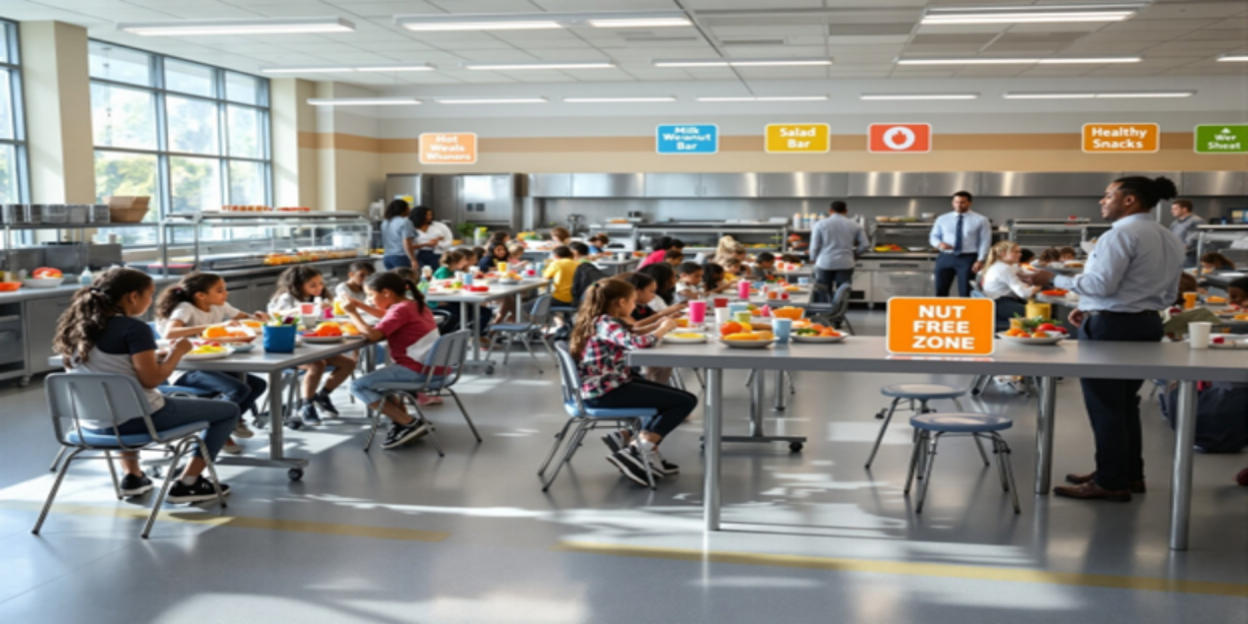
Designated allergy-free zones—such as nut-free tables—give students with severe allergies a controlled, lower-risk space to eat. These zones should be clearly marked, supervised, and supported by rules on what food can be brought into that area. Consistent cleaning routines before and after meals are essential to reduce cross-contact on surfaces.

3. Train Cafeteria Staff for Real-Life Scenarios
All cafeteria staff should be trained to:

  • Recognize common signs of an allergic reaction (hives, swelling, breathing difficulty, vomiting, dizziness).
  • Respond quickly using the school’s emergency protocol.
  • Safely use epinephrine auto-injectors (EpiPens) when authorized and applicable.
    Regular drills and refreshers help staff stay confident and calm if a real emergency occurs.

4. Build Peer Awareness and Respect
Students play a big role in allergen safety. Age-appropriate awareness sessions, posters, and classroom discussions can teach children:

  • Why some classmates must avoid certain foods.
  • Why sharing food is unsafe, even “just one bite.”
  • How to respect allergy-safe zones and follow cafeteria rules.
    Fostering empathy reduces teasing, stigma, and risky behavior.

5. Collaborate Closely with Parents and Healthcare Providers
For each student with a serious food allergy, schools should maintain an Individualized Health or Allergy Action Plan. This should include confirmed allergens, symptoms, emergency steps, and medications. Regular check-ins with parents help keep information current—especially when menus, suppliers, or the child’s health status changes.

When schools treat allergen safety as a shared responsibility—between staff, students, and families—the cafeteria becomes more than a place to eat; it becomes a safe, inclusive space. Protecting students with allergies is not just a policy requirement. It is a daily commitment to their health, dignity, and well-being.

Prev Article
Maintaining Hygiene and Sanitation in School Cafeterias: A Practical Guide
Next Article
Emergency Preparedness in School Cafeterias: Protecting Students Where They Eat

Related to this topic:

rocket-icon rocket-icon rocket-icon

Learn What Makes Schools Truly Safe

Receive safety guides, policy updates, and best practices from global experts.

We care about your Personnel Data. Please check Privacy Policy