ESC

What are you looking for?

ESC

What are you looking for?

Shopping cart

Your favorites

You have not yet added any recipe to your favorites list.

Browse recipes

Schedule your 15-minute demo now

We’ll tailor your demo to your immediate needs and answer all your questions. Get ready to see how it works!

0
0
×

School E-Shop

Smarter Mobile Phone Use in Schools

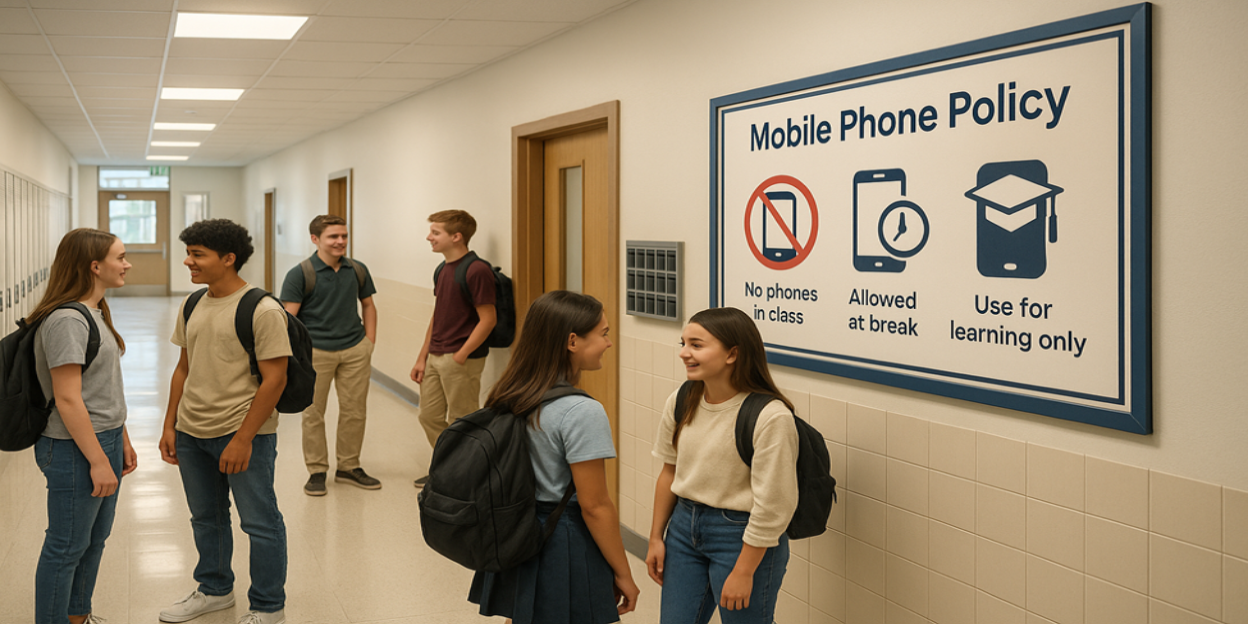
Mobile phones are now part of every student’s daily life. For schools, the challenge is not simply “phones or no phones” but how to balance technology with focused learning and safety. A clear, well-communicated mobile phone policy can turn potential distractions into powerful learning tools.

A strong policy starts with simple, specific rules. Schools should define exactly when, where, and how phones may be used. For example, mobile phones can be required to stay on silent and out of sight during lessons, but allowed during breaks or lunch. Some schools choose “instructional use only” rules in class—phones can be used for research, learning apps, or quizzes, but never for social media, gaming, or messaging.

Why does this matter? Unrestricted phone use can lead to lost learning time, cyberbullying, secret photography, and exposure to harmful content. At the same time, banning phones completely may limit access to digital tools and life skills students need in a connected world. A balanced policy protects concentration, privacy, and emotional safety while still using technology to support learning.

Education is just as important as enforcement. Students and staff should be regularly taught about:

  • Cyber safety: recognizing cyberbullying, harmful content, and scams
  • Online etiquette: respectful communication, no recording or sharing without consent
  • Digital footprint: how posts, photos, and comments can follow them into the future

Teachers can weave short discussions and activities on these topics into homeroom periods, ICT lessons, or life skills classes. Staff must also be trained on how to use phones purposefully in class—such as quick polls, language practice apps, or collaborative research—so devices add value instead of noise.

Monitoring and consequences should be fair and transparent. Schools may require phones to be kept in bags, lockers, or classroom phone pockets during teaching time. Misuse—such as filming others without consent, accessing social media in class, or using phones for cheating—should have clearly defined, graduated consequences that are consistently applied.

Parents play a crucial role. Involving them in policy development and sharing expectations helps ensure that responsible phone habits continue at home. Schools can encourage parents to:

  • Set similar rules for homework time and night-time phone use
  • Talk with children about safe online behavior
  • Support the school when consequences are applied

When schools, teachers, students, and parents work together on a practical mobile phone policy, technology becomes a support—not a barrier—to learning. The goal is not to eliminate phones, but to guide students to use them wisely, safely, and with respect for the learning environment.

Prev Article
Risk Assessment & Emergency Preparedness for Safe School Trips
Next Article
Implementing Mobile Phone Policies in Schools: Challenges and Smart Solutions

Related to this topic:

rocket-icon rocket-icon rocket-icon

Learn What Makes Schools Truly Safe

Receive safety guides, policy updates, and best practices from global experts.

We care about your Personnel Data. Please check Privacy Policy