ESC

What are you looking for?

ESC

What are you looking for?

Shopping cart

Your favorites

You have not yet added any recipe to your favorites list.

Browse recipes

Schedule your 15-minute demo now

We’ll tailor your demo to your immediate needs and answer all your questions. Get ready to see how it works!

0
0
×

School E-Shop

Safe Storage of School Hazards

Schools are busy environments filled with chemicals, cleaning agents, sharp tools, sports gear, and electrical equipment. While these items support learning and daily operations, unsafe storage can quickly turn them into serious hazards. A clear and well-enforced storage policy is essential to protect students, staff, and visitors.

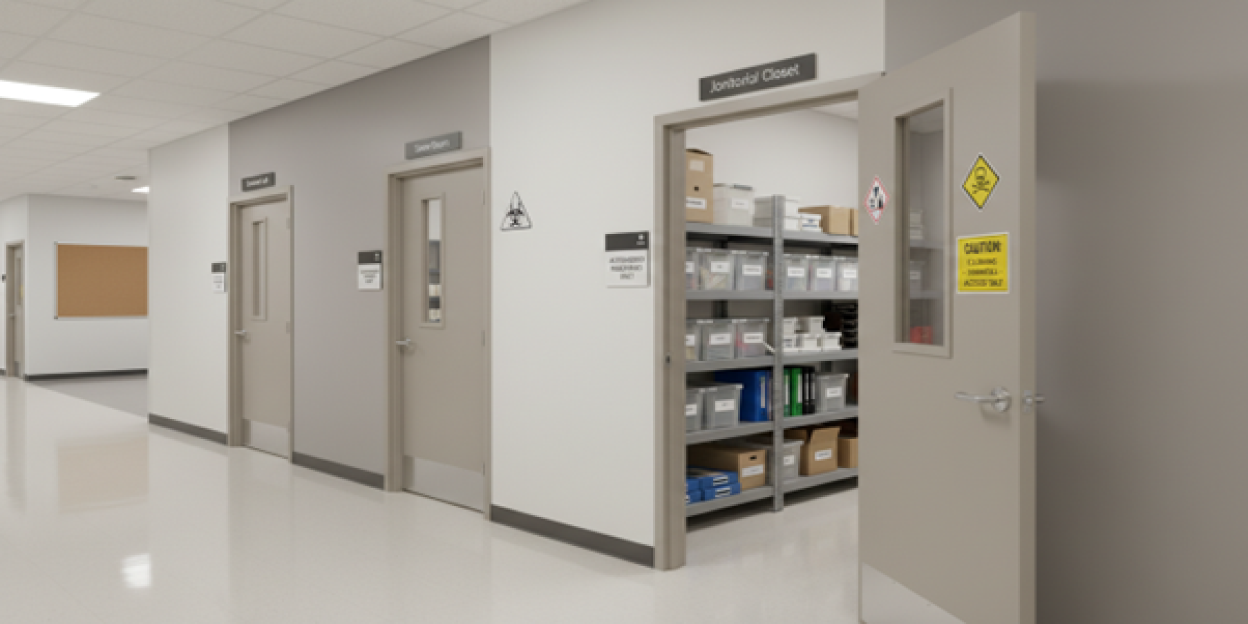
Proper storage starts with understanding what’s hazardous. In science labs, chemicals, flammable liquids, and gas cylinders should be kept in secure, ventilated spaces, using appropriate cabinets and secondary containment where required. Janitorial areas often hold strong cleaning agents and disinfectants that must be stored in locked closets, clearly separated from any food or student-accessible areas. In art rooms, workshops, and technical labs, sharp tools, paints, solvents, and adhesives should have designated storage zones with clear labeling and safe handling rules.

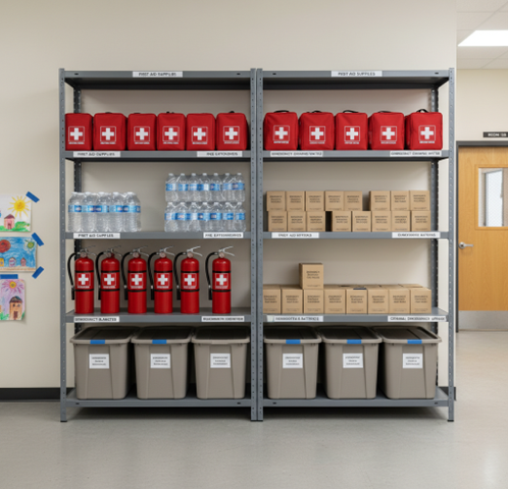
Safe storage is built on a few key practices. First, every item needs a “home.” Label shelves, bins, and cabinets so that staff know exactly where each material belongs. Group similar items together and separate incompatible substances (for example, acids away from bases). Second, restrict access. Hazardous materials should only be reachable by trained, authorized personnel. This means locks on chemical cabinets, janitorial closets, and tool rooms, and clear signage such as “No Student Access” or “Authorized Staff Only.”

Emergency readiness is equally important. Schools should have simple, visible protocols for dealing with spills, leaks, or accidental exposures. This includes eye-wash stations in labs, spill kits where chemicals are stored, and clear instructions posted near storage areas. Staff must know who to contact, how to isolate the area, and what first aid steps to take.

Regular audits help ensure that good intentions become consistent practice. Scheduled inspections of labs, store rooms, janitorial closets, and art or workshop areas can identify expired chemicals, damaged containers, blocked exits, or unlabeled bottles before they cause harm. A simple checklist can guide staff to confirm that cabinets are locked, labels are legible, and safety data sheets (SDS) are available.

Prioritizing safe storage is not just about compliance; it’s about creating a learning environment where risks are thoughtfully managed. When hazardous materials and equipment are stored correctly, schools reduce the chance of accidents, protect vulnerable age groups, and model responsible behavior for students. Leadership should support this by providing proper storage infrastructure, training staff, and reinforcing that safety is a shared responsibility across the whole school community.

Prev Article
Preventing Theft and Vandalism: How Smart Storage Policies Protect Your School
Next Article
Smart Storage, Safer Schools: How Storage Policies Support Emergency Preparedness

Related to this topic:

rocket-icon rocket-icon rocket-icon

Learn What Makes Schools Truly Safe

Receive safety guides, policy updates, and best practices from global experts.

We care about your Personnel Data. Please check Privacy Policy