School cafeterias
are more than just places where children eat. They are lively social spaces
where friendships grow, social skills are tested, and school culture is on full
display. Because they are busy and often less structured than classrooms,
cafeterias also carry higher risks for conflict, bullying, and accidental
injuries. This makes behavior management in school cafeterias a key part of
overall school safety.
Clear expectations
are the foundation of a safe cafeteria. Simple, specific rules such as “Walk at
all times,” “Keep hands and feet to yourself,” “Use inside voices,” and “Clean
your eating area” help students understand exactly what is expected. These rules
should be introduced at the start of the year, practiced with students, and
reinforced through visual reminders like posters, table tents, and PA
announcements. When expectations are predictable, students feel more secure and
are more likely to cooperate.
Bullying and
harassment often surface in less supervised or noisy environments, and the
cafeteria is one of the most common hotspots. Schools should have a clear
anti-bullying policy that applies specifically to shared spaces, including
cafeterias and Playgrounds. This includes defining unacceptable behaviors
(teasing, exclusion, name-calling, spreading rumors), outlining age-appropriate
consequences, and ensuring there are easy, safe ways for students to report
concerns. Training cafeteria monitors and teachers to recognize early
signs—such as a student always sitting alone, groups whispering about one
child, or repeated seat changes—helps adults intervene before harm escalates.
Active supervision
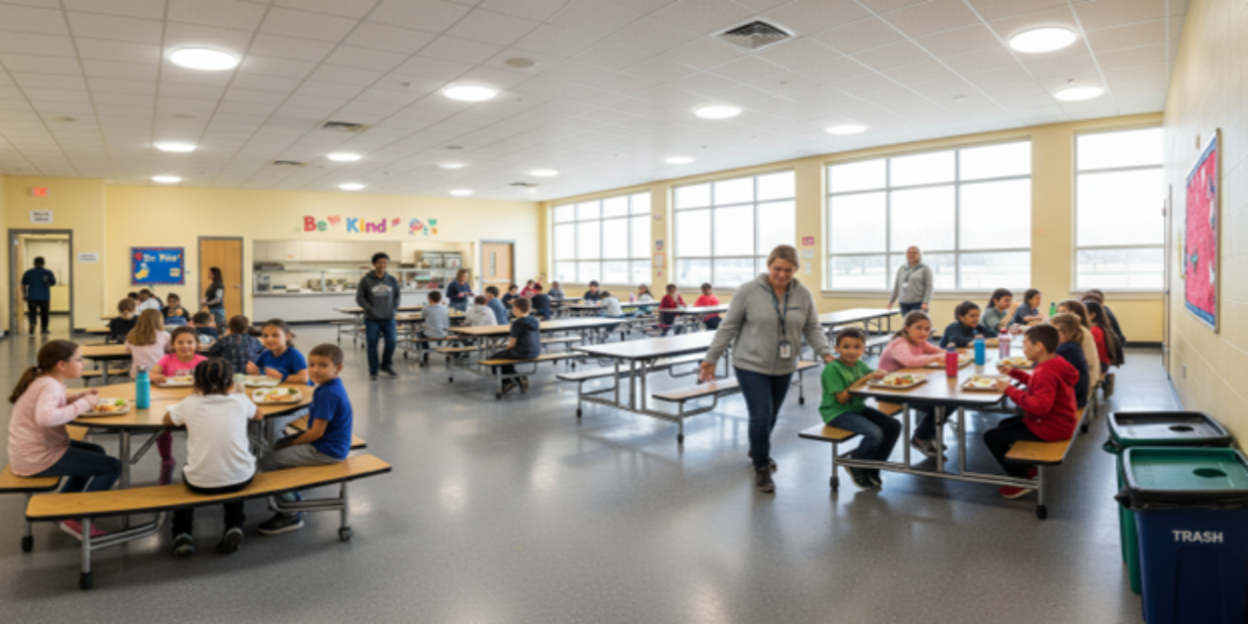
is essential. Staff should be strategically positioned to see the entire room,
move continuously, and engage positively with students rather than supervising
from one corner. Rotating supervisory duties across staff and giving them clear
roles (e.g., traffic flow, table zone, serving line) can reduce blind spots and
ensure consistent coverage. A calm adult presence not only deters misbehavior
but also reassures students that help is nearby if something goes wrong.
A strong behavior
plan doesn’t only focus on stopping negative actions—it also promotes positive
interactions. Programs like “Lunch Buddies,” peer helpers, or mixed-grade
seating on certain days can support inclusion and reduce social isolation.
Recognizing students for kind behavior—helping a peer, cleaning up, inviting
someone to join a table—builds the message that the cafeteria is a community
space, not just a place to eat.
Finally, cafeteria
staff and supervisors need practical skills in conflict resolution. Training in
active listening, de-escalation, and fair problem-solving helps adults respond
calmly when conflicts arise. Clear escalation pathways—knowing when to involve
counselors, teachers, or administrators—ensure that serious issues are handled
appropriately and documented.
When cafeteria
behavior is well managed, everyone benefits. Students enjoy a safer, more
respectful environment, staff can focus on their duties, and families gain
confidence that their children are cared for not just in the classroom, but
everywhere in the school. By treating cafeteria behavior management as a core
safety practice, schools create environments that support both physical safety
and emotional well-being.
School leaders and
educators can start today by reviewing cafeteria rules, supervision plans, and
staff training. Even small, consistent improvements in expectations and
oversight can transform the cafeteria into a model of safety, respect, and
positive school culture.
Prev Article
Ensuring Safe Food Practices in School Cafeterias
Next Article
Maintaining Hygiene and Sanitation in School Cafeterias: A Practical Guide